
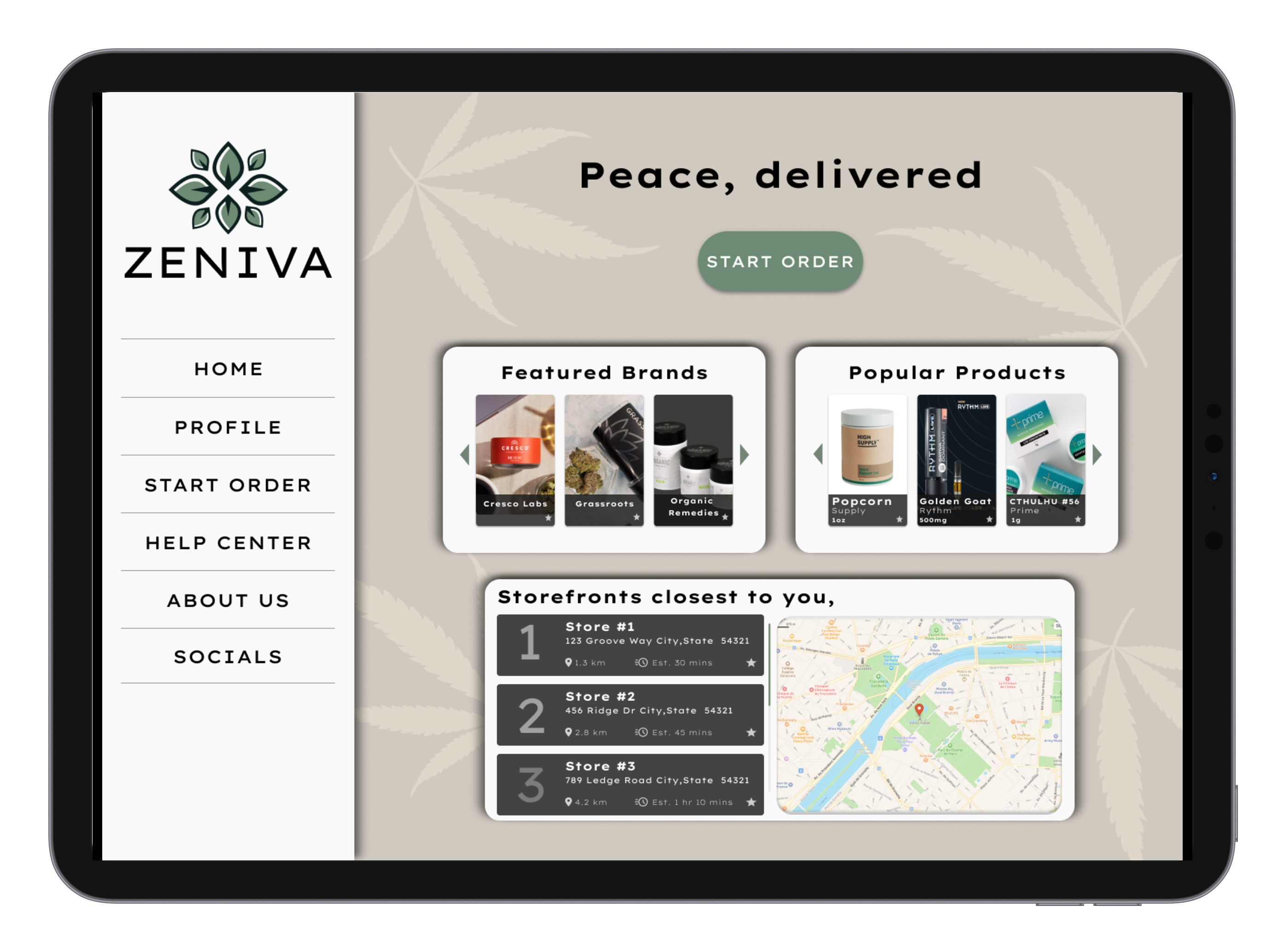
Zeniva is the first delivery service for patients registered with the Pennsylvania Medical Marijuana Program, providing access to those with limited public transportation, disabled communities, and those who seek convenience. Our primary target is users 21-65 year-olds who legally obtain a medical card and are approved by their primary care practitioner. The app is designed to facilitate the delivery of alternative medicine to registered patients in their homes, as well as to their respective caregivers.
The Pennsylvania medicinal marijuana program has provided relief to millions of patients, but some face barriers to accessing it due to factors such as economic status, geographic location, and limited mobility. Our target end users would highly benefit from the program, but face numerous hurdles to visit store locations themselves or through a caretaker. However, since delivery of medicinal marijuana to residential locations is not yet allowed in PA, we compiled user research data from states that legally permit such delivery.
Since there are no direct competitors in the area, we informally interviewed residents in states where laws permit the delivery of medicinal and recreational cannabis products to an individual's residential address. Our research findings indicate that users value an intuitive interface that quickly guides them to successful orders, reliable consistency with deliveries, and ADA-compliant features to ensure anyone can use the app or website.
In developing this concept, we kept in mind unique business requirements from key stakeholders to the end user, such as compliance with state regulations for the PAMMJ program, improving patient satisfaction, and reducing delivery times while maintaining consistent order accuracy.
Click here for the Lo-fidelity prototype based on the first version of wireframes.
.png)
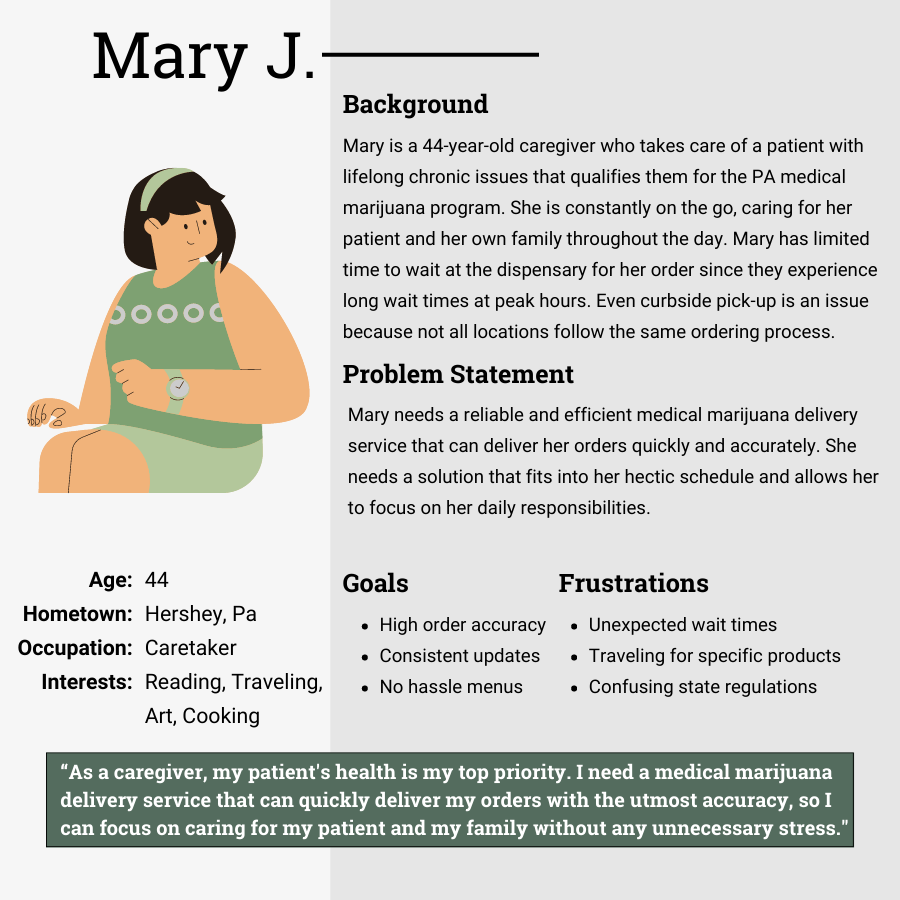
Click here for the High-fidelity prototype.
I utilized data from user research and competitive analysis to design the final prototype of Zeniva, incorporating features that resemble those of popular on-demand delivery services. My goal was to provide users with an intuitive experience that feels both familiar and brand new each time they place an order.
Zeniva's targeted end users value features such as quick and easy-to-complete orders, as well as consistently accurate product information. To address these wants, the app indicates delivery time estimates as the user selects their preferred dispensary to start their order.

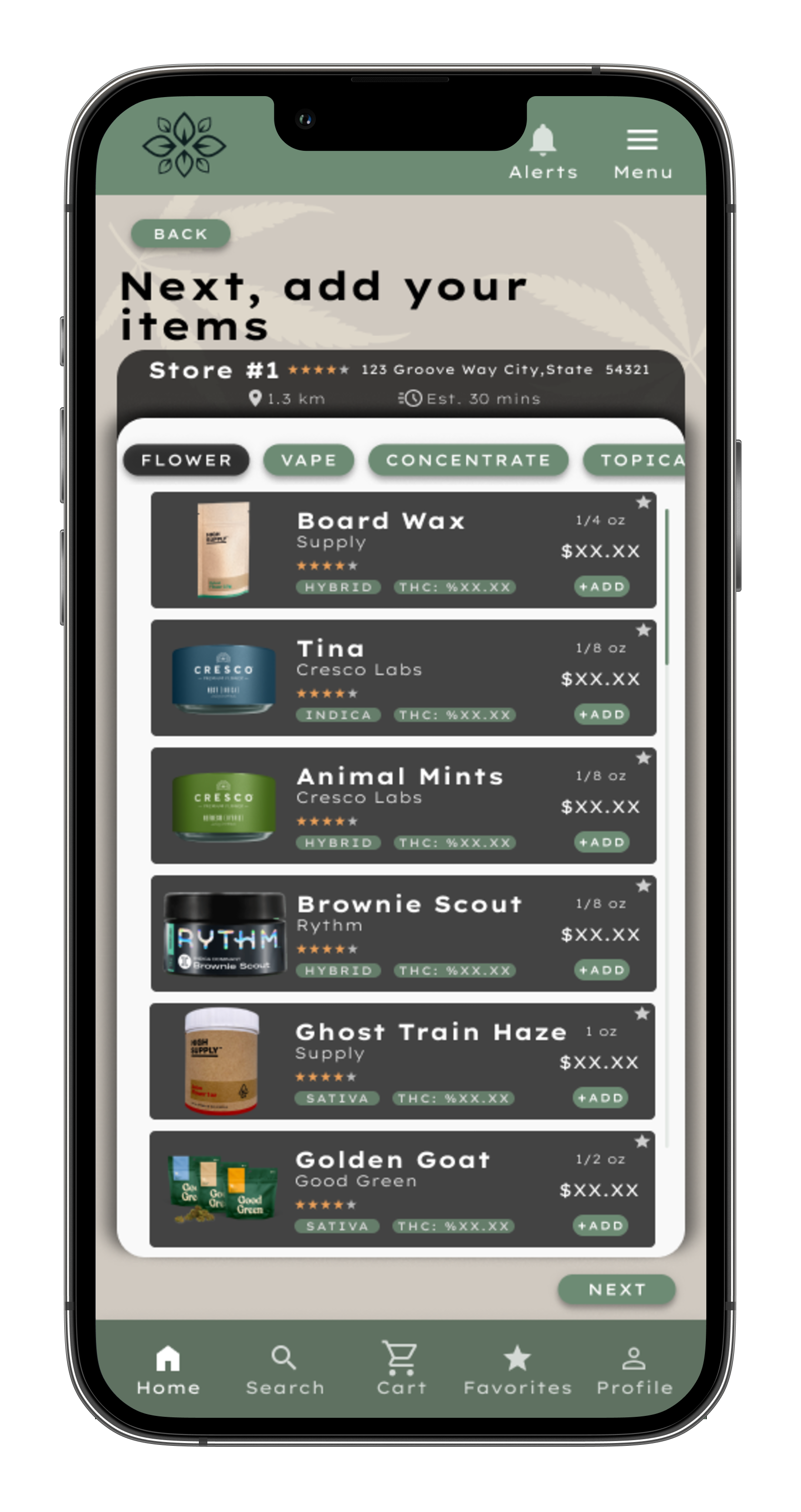
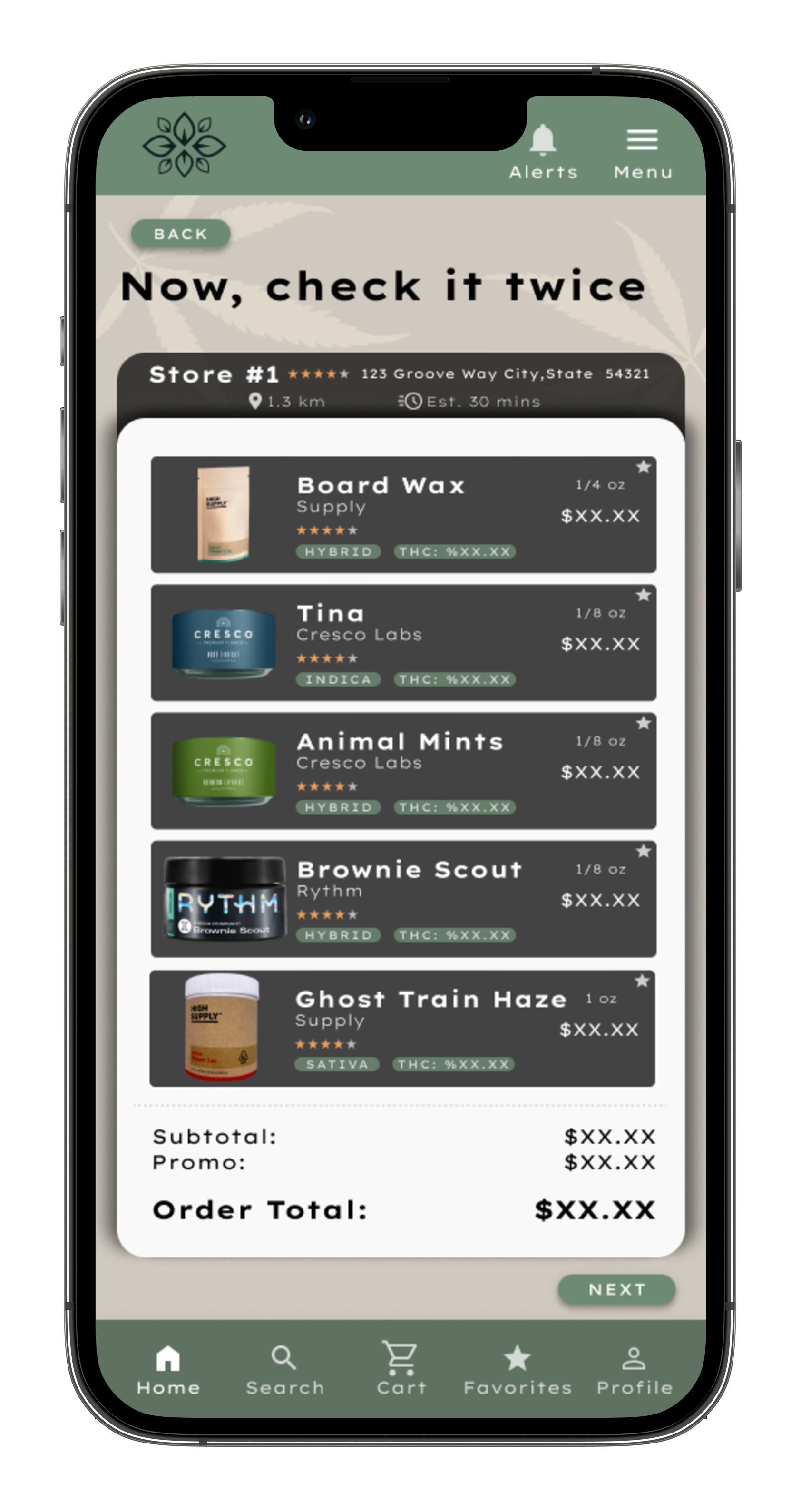
To ensure product information is consistently accurate, each product has a snapshot of the product strain (Sativa/Indica/Hybrid) and available weights right in the menu selection screen.
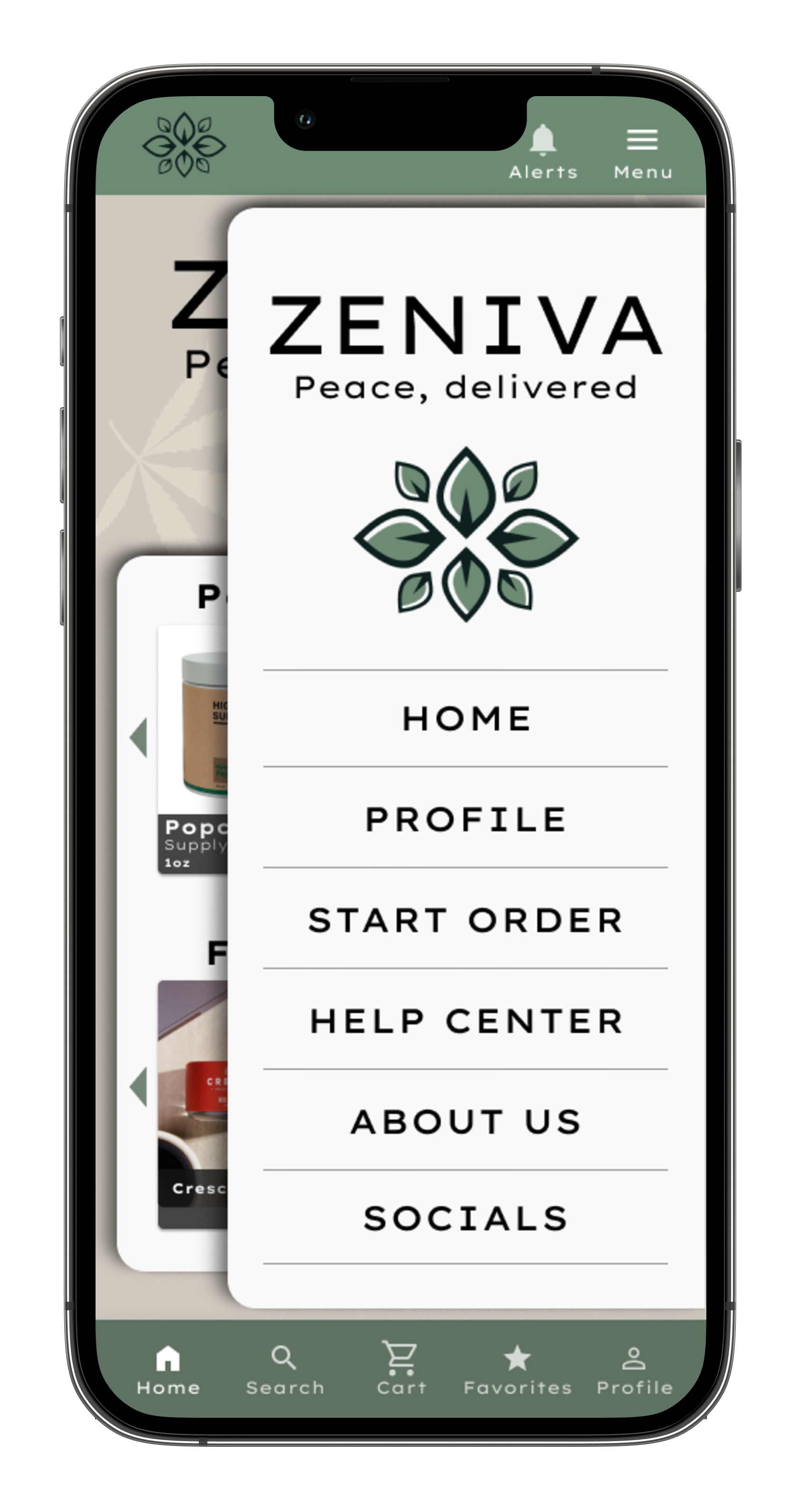
With a focus on inclusivity, the app's design incorporates a color palette and features that are ADA compliant, ensuring that every user can easily navigate the app. All menu buttons have large surface areas to help those who may use the app with one hand.
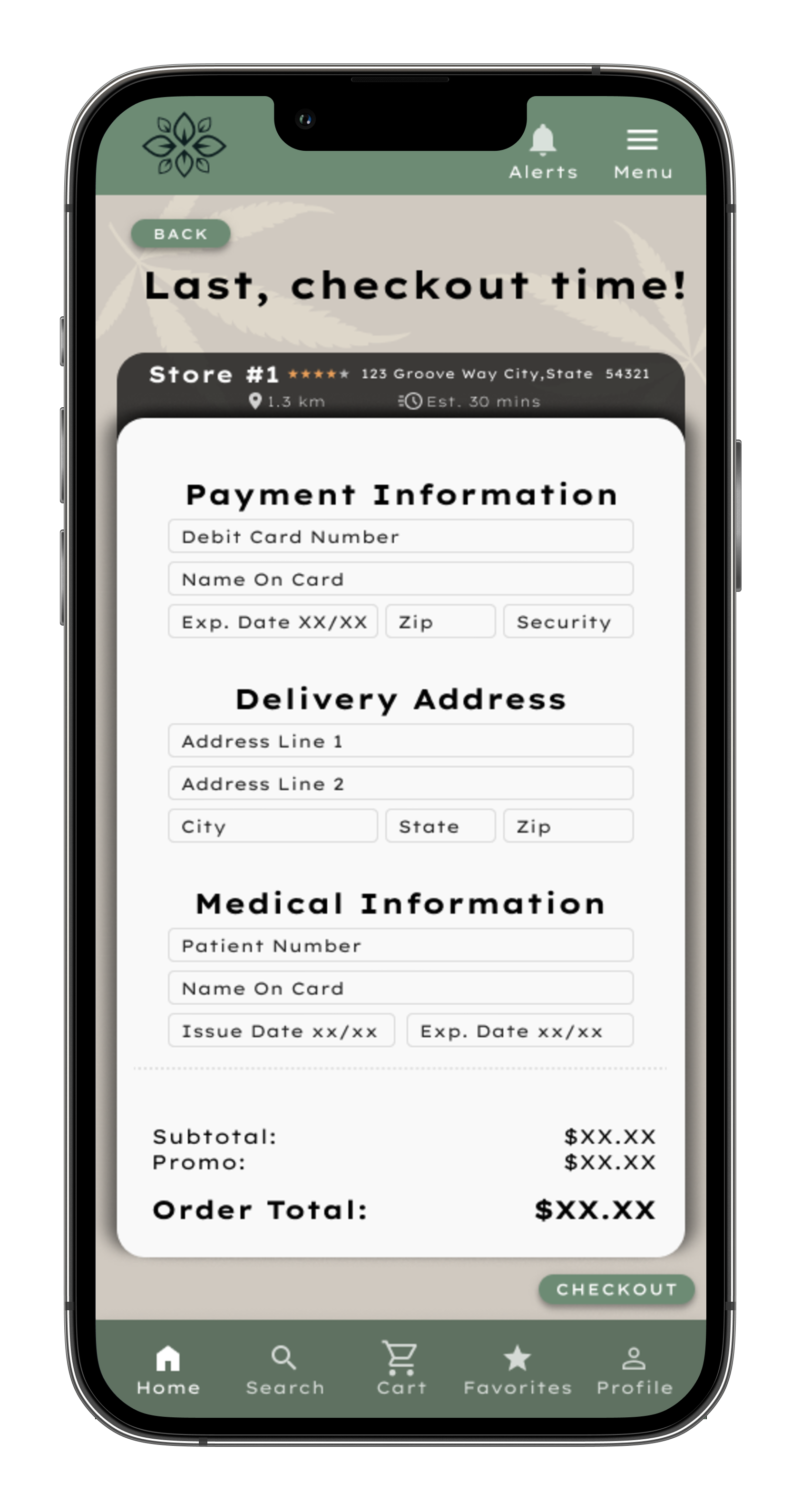
For legal compliance with the Pennsylvania Medical Marijuana Program, patients must provide their patient number and card issue dates when entering their information in the app.
The interface is also designed to be screen reader-friendly, ensuring accurate order information is entered for users who require visual aid. This also enables dispensaries to track their respective reward programs with participating locations.
_iphone13promaxgraphite_portrait.png)
Through designing Zeniva, I learned that putting the end user's needs at the forefront of the design process is essential to creating products that truly solves the users pain points. By prioritizing accessibility, we were able to expand patient reach to rural areas and increase overall patient satisfaction. Moving forward from this project, I will continue to integrate accessibility best practices into my work, ultimately creating better user experiences for all, with a focus on underserved communities.